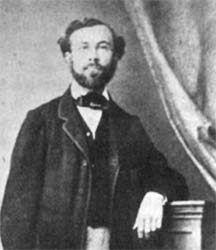
“Finally, there’s Alexander Bain, who was awfully close to being a real psychologist, not just a philosopher with psychological interests. Among other things, Bain discussed voluntary behavior and how it’s related to learning. In this discussion, Bain developed what Edward Lee Thorndike would later call the law of effect—successful behaviors tend to be repeated, unsuccessful behaviors drop out.

“As we have seen, the empiricists believed that knowledge comes from experience. In this, they influenced the positivists, whose approach to science was based on observable scientific facts and their relations to each other. Psychology’s development as a science was greatly influenced by positivism. We will see the initial development of psychology as a science next week when we visit the man considered the founder of scientific psychology—Wilhelm Wundt.”

* * *

Today the class was going to the University of Leipzig to see a portion of a lecture by Wilhelm Wundt. The year was 1876, and Wundt had not been in Leipzig long. However, he had already established a positive reputation among the undergraduates, who considered him one of the school’s best lecturers. Watson had guided the Waybach to a position at one end of a large lecture hall, which was filled with several hundred students, all impeccably dressed. By comparison, Watson and his students looked like a gaggle of ragamuffins.

Many of Wundt’s students were quietly conversing with their neighbors, but there was none of the buzz and chatter Watson had come to expect from his classes. “Watch what happens when Wundt comes in,” he said.